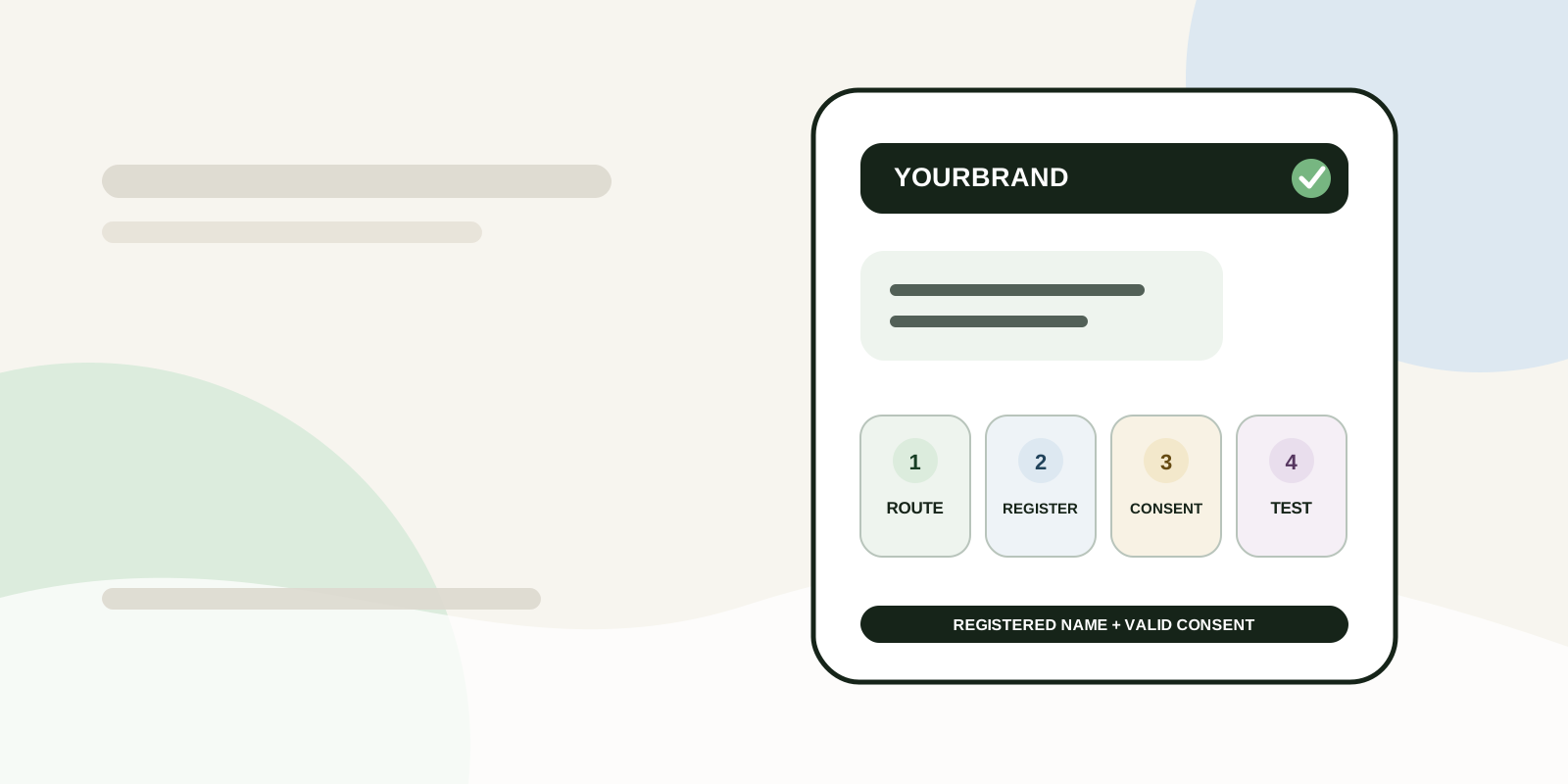

A branded sender name can make a text recognisable. Since 1 July 2026, that name must also be registered when it is used to send SMS or MMS to Australian mobile numbers.
If it is not registered, Australian telcos replace it with Unverified. For a Shopify founder, that can turn a legitimate campaign, order update, or welcome message into something a customer may distrust.
Why this check matters now
The Australian Communications and Media Authority (ACMA) launched the SMS Sender ID Register on 1 July 2026. A sender ID is the name shown at the top of a branded text, such as a store name. Unregistered names are now replaced with Unverified and grouped in one Unverified thread on recipients' phones.
The label does not prove the message is unlawful or failed. It does remove an expected brand cue. Provider outcomes can also vary, so confirm the route and inspect what a recipient sees rather than relying on a dashboard alone.
Run four gates before the next Australian send
The useful question is not simply, "Are we registered?" A founder needs four connected answers.
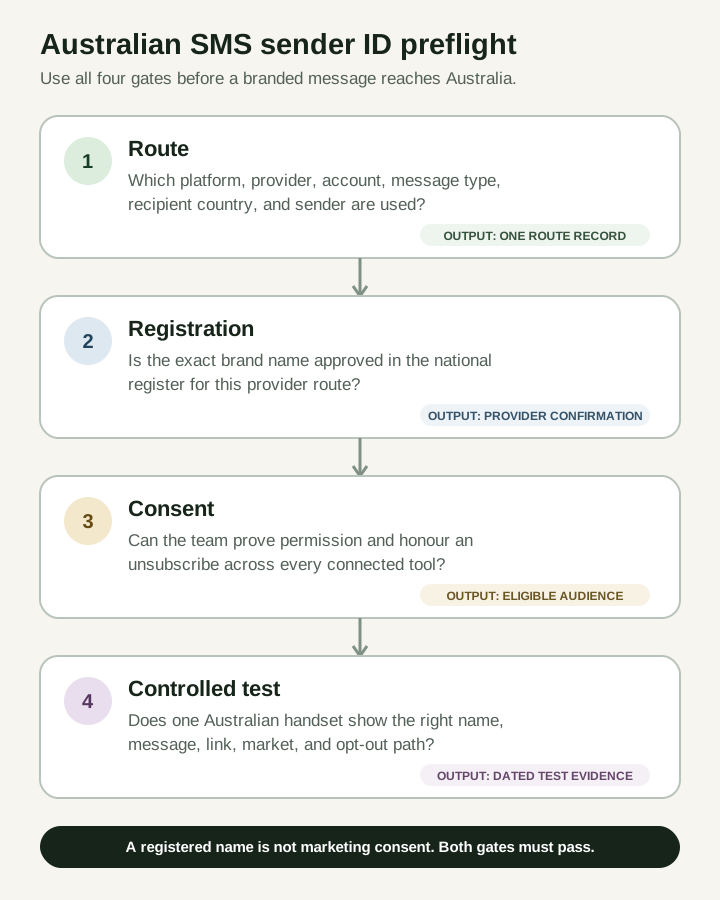
1. Identify the sending route
List every system that can text an Australian number, including lifecycle, support, subscription, and authentication tools. For each route, record the provider, account owner, message type, and visible sender. One store can have several routes.
Numeric long codes and short codes follow different paths. Ask the provider which Australian rules apply instead of assuming the branded sender process covers them.
2. Confirm the exact sender ID and status
Check the exact name configured for Australia. ACMA says a registrable ID must be 2 to 11 characters, cannot be numbers only, and must be clearly linked to the organisation.
Ask the provider for evidence that it is complete in the national register, not merely saved in the provider dashboard. An Australian business with an ABN should also confirm its authorised contact details in the Australian Business Register are current.
An overseas business without an ABN must use a certified Australian telco or one of its international partners. Its ID must match its organisation name in an official register or its trademark.
3. Keep registration separate from consent
Registration does not create permission to market. ACMA says commercial messages generally need consent, accurate sender identification, contact details, and a working unsubscribe method. The business remains responsible when a platform or agency sends on its behalf.
That includes commercial welcome and retention journeys. Shopify's sms_subscription_status segment filter is a useful routing control, but keep evidence of who consented, when, and how.
4. Test the recipient experience
Use a company-controlled Australian mobile number and the smallest safe test. Confirm:
- The visible sender matches the approved name.
- The message is not grouped under Unverified.
- Links, market, currency, and offer terms are correct.
- The unsubscribe path works for that sender type.
- The opt-out reaches each connected sending system.
One handset cannot prove every carrier path works. Save the result, date, route, sender ID, and owner for retesting.
Match the action to your setup
| Current setup | Founder action |
|---|---|
| Australian business with an ABN and a branded sender | Get national-register confirmation and check the ABR contact used for approval. |
| Overseas business without an ABN | Confirm the provider is certified in Australia or partnered with a certified provider. |
| Numeric long code or short code | Request the number-specific compliance path. |
| No SMS to Australian mobiles | Record that fact. No Sender ID Register action is needed for this route today. |
A 30-minute founder test for this week
Choose one Australian SMS journey, but do not change or scale it yet.
- Write down the journey, platform, provider, exact sender, message purpose, and account owner.
- Capture the national registration status and supporting organisation name.
- Check that the audience rule includes only the intended SMS consent state.
- Run one controlled internal message and inspect the sender label and opt-out path.
- Assign an owner to resolve any mismatch before the next send.
The output is a one-page route record, not a new messaging strategy.
Limits and reasons to pause
Pause a promotional send if nobody can show who owns the route, how the ID was registered, or why the audience is eligible.
Do not treat an approved name as proof of consent, or a green dashboard status as coverage for every subaccount and brand variation. Switching providers can also introduce new identity, suppression, and deliverability risks.
This article is operational guidance, not legal advice. Get qualified Australian advice for uncertain consent, exemptions, or message classification.
Inficial can help map a Shopify messaging route, check platform ownership and customer-state handoffs, and prepare a controlled implementation plan.
Sources
- SMS Sender ID Register, ACMA, accessed August 17, 2026
- Ensure your sender IDs meet the valid use case rules, ACMA, accessed August 17, 2026
- Update your details on the Australian Business Register, ACMA, accessed August 17, 2026
- Registering sender IDs, ACMA, accessed August 17, 2026
- Avoid sending spam, ACMA, accessed August 17, 2026
- Telemarketing and e-marketing: common issues and mistakes, ACMA, accessed August 17, 2026
- Shopify-based customer segment filters, Shopify Help Center, accessed August 17, 2026

