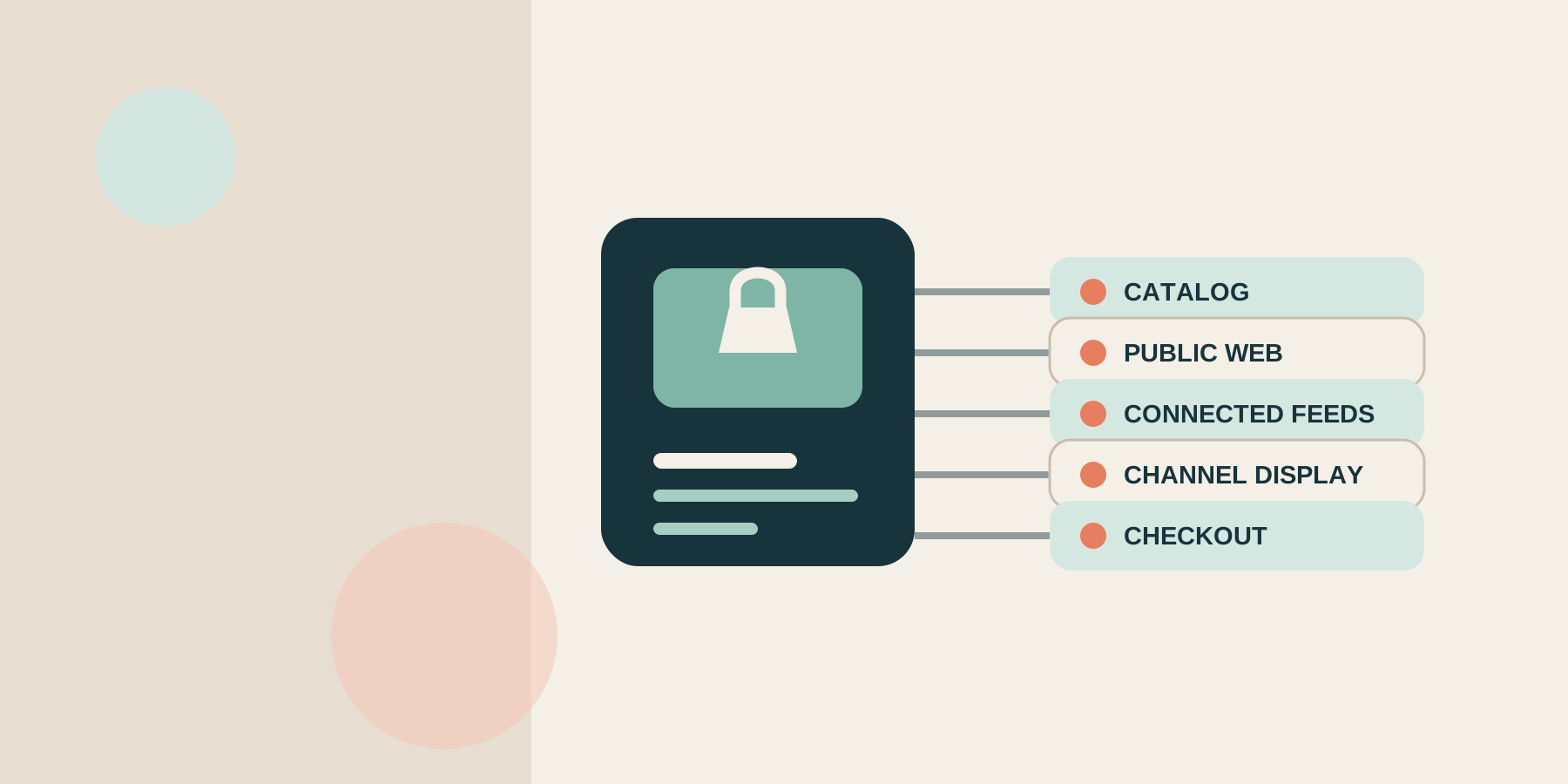

A merchant disables Shopify Catalog access for one AI channel and assumes the product has disappeared. It may still be found through the public storefront, a search index, or a separately connected product feed.
That is the central operational risk in agentic commerce: discoverability is no longer one switch.
Shopify describes several paths through which products can reach AI shopping experiences. Shopify Catalog is one path. Web crawling, owned feeds, Google & YouTube, Facebook & Instagram, and Shop can create others. Advanced teams need a control matrix that separates product data, channel access, search visibility, and checkout eligibility.
One product can travel through several discovery paths
Shopify Catalog is a structured product source built from eligible Shopify products. It can include titles, descriptions, variants, images, prices, and availability. Participating AI channels can use it for product discovery.
But Catalog is not the entire distribution system. Shopify says products can also be discovered through web crawling and indexing or through feeds a merchant already provides. Google AI Mode and Gemini availability is tied to the Google & YouTube sales channel. Meta availability is tied to Facebook & Instagram. Shop uses Shopify Catalog but has its own relationship to channel controls.
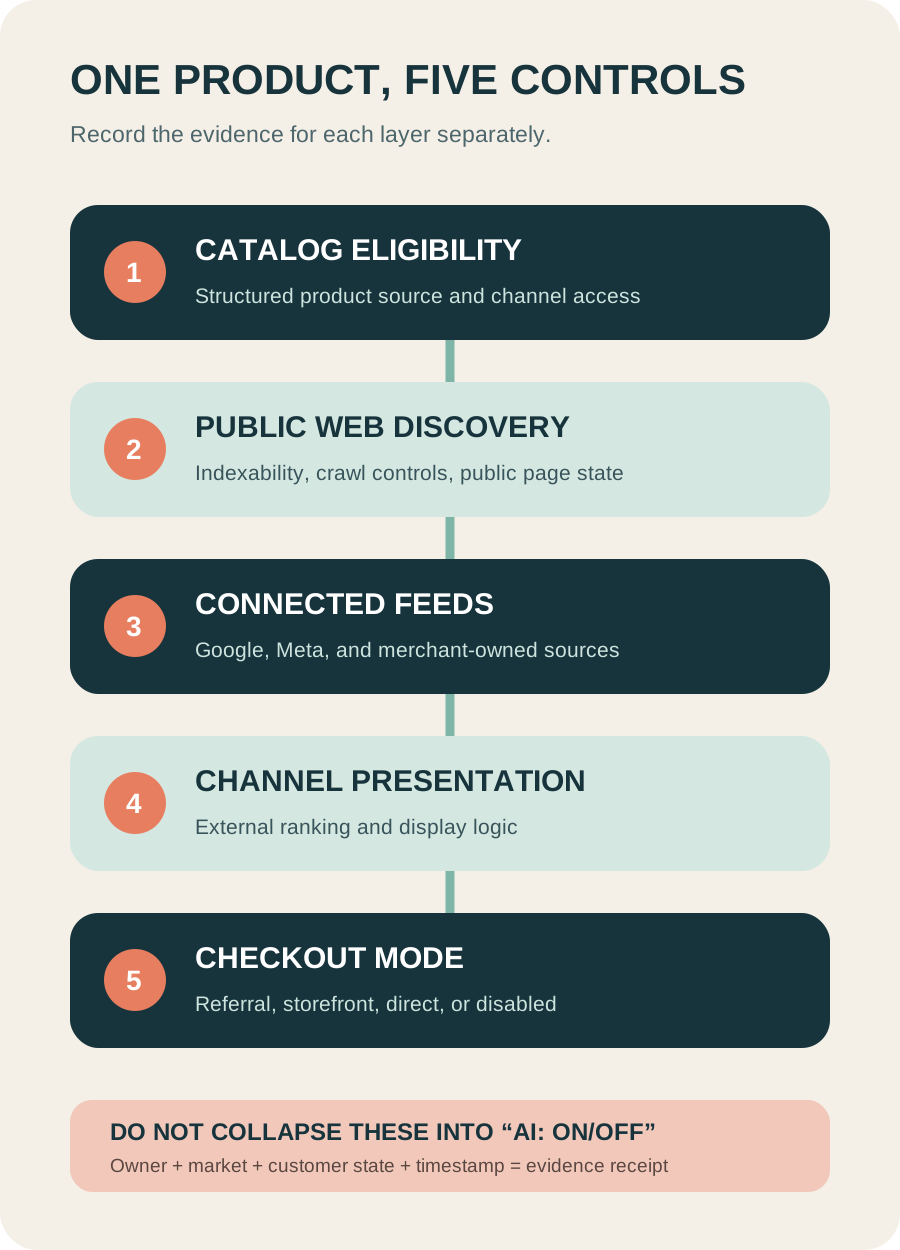
This creates four distinct questions:
- Is the product eligible for a structured source?
- Can an external system discover the public page another way?
- Will a channel choose to display or rank it?
- Where can the customer complete checkout?
If a team records only “AI enabled: yes/no,” it loses the distinction that matters during an incident.
Build the control matrix before changing visibility
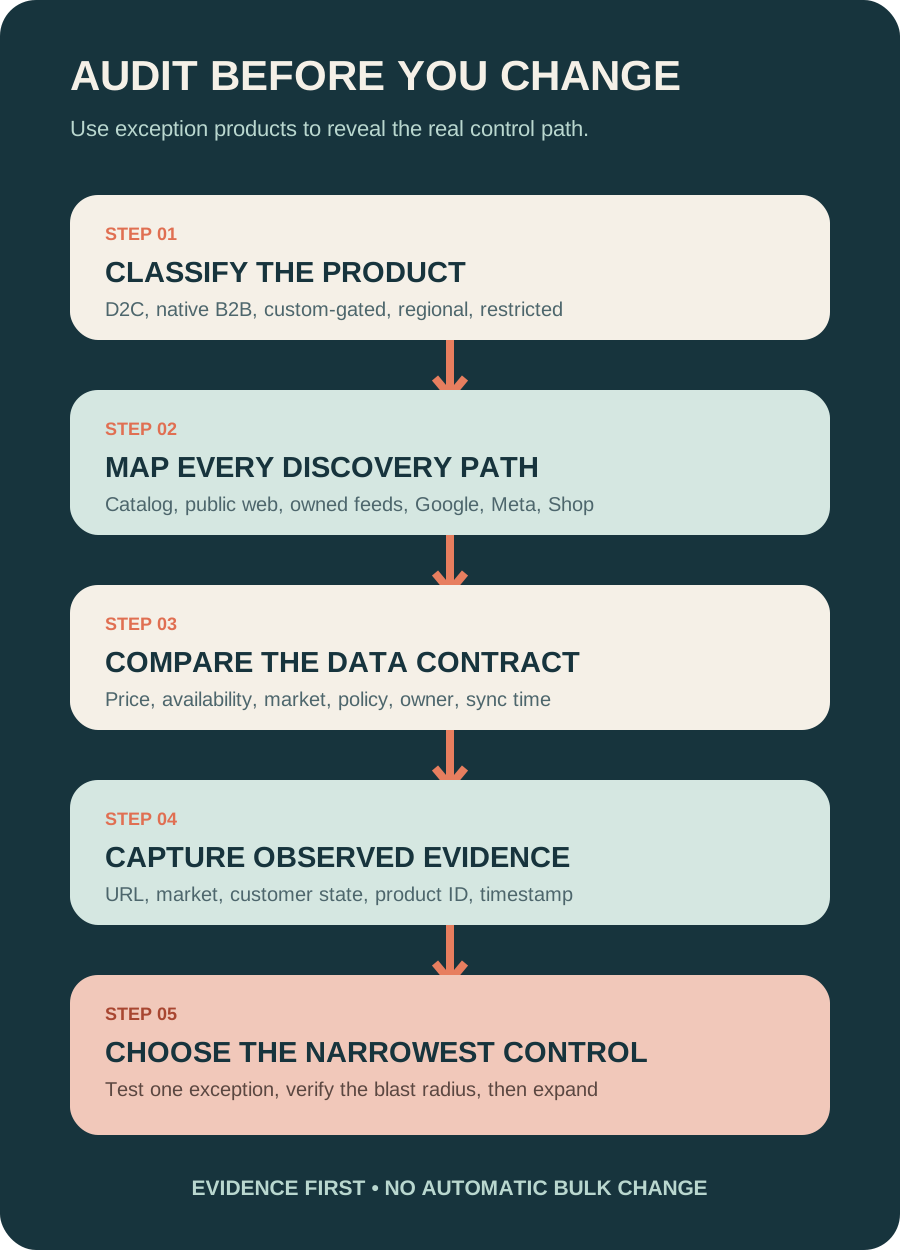
Create one row per product or product class. At minimum, record:
| Field | What it proves | Typical owner |
|---|---|---|
| Commerce class | D2C, native B2B, custom-gated, wholesale, or restricted | Merchandising and legal |
| Publication state | Online Store, Shop, Google, Meta, and other channel availability | Ecommerce operations |
| Catalog state | Eligible, ineligible, or channel access disabled | Ecommerce operations |
| Search state | Indexable, Unlisted, seo.hidden, or otherwise restricted | SEO and engineering |
| Feed state | Connected source, last sync, item status, and policy exceptions | Growth and feed owner |
| Checkout mode | Storefront checkout, direct checkout, referral only, or disabled | Commerce owner |
| Data contract | Owner for price, availability, images, policies, and market values | Product-data owner |
| Evidence receipt | Checked URL, market, product ID, timestamp, and reviewer | Analyst |
The evidence receipt prevents a common failure: testing one market, one logged-in state, or one variant and treating it as universal. Keep the observed state separate from the intended policy.
Test exceptions, not only bestsellers
A ten-product sample should include the awkward cases that expose control gaps:
- ✓A normal D2C bestseller
- ✓An out-of-stock variant
- ✓A regional or market-exclusive offer
- ✓A native Shopify B2B-only product
- ✓A product hidden behind custom theme or app logic
- ✓An Unlisted product
- ✓A product using seo.hidden
- ✓A product with Catalog access disabled for one channel
- ✓A product discoverable while direct checkout is disabled
- ✓A product with conflicting channel or policy data
The custom-gated B2B case deserves special attention. Shopify says it automatically excludes B2B-only products when it can identify them, but custom implementations that hide prices or purchasing until login might not be recognized as B2B. That is not a reason to assume exposure. It is a reason to test the public output and review the control with the product, legal, and engineering owners.
Do not use a broad hiding control for a narrow problem
Unlisted can remove a product from Shopify-powered search surfaces and search-engine discovery. Shopify also documents seo.hidden as a way to hide a product from sitemaps, search engines, storefront search, and Shopify Catalog. Those controls can be appropriate for private or restricted inventory, but they are wider than “remove this item from one AI channel.”
Likewise, disabling Shopify Catalog access for ChatGPT or Microsoft Copilot is narrower than “make the product undiscoverable.” Shopify explicitly notes that public products may still be found through crawling, indexing, or other feeds.
Before changing anything, state the required outcome precisely:
- Prevent checkout in one channel
- Remove Catalog access for one channel
- Stop a feed from distributing the item
- Remove the public page from search discovery
- Make the product inaccessible to everyone except an authorized audience
Each outcome has a different control and blast radius.
Measure the system without pretending to know the ranking
Shopify's Catalog preview can show how a query matches Catalog data, but Shopify warns that channels can apply their own ranking and display logic. Treat the preview as a diagnostic input, not a customer-result simulator.
A useful weekly dashboard tracks:
- Percentage of intended products eligible for each discovery path
- Count of unintended products exposed to a path
- Price, availability, market, and policy inconsistencies
- Products with undocumented custom access logic
- Referral sessions and orders attributed to supported channels
- Unresolved exceptions by owner and age
This measures controllable system quality. It does not claim to measure an opaque AI ranking algorithm, nor does it promise impressions, citations, clicks, or revenue.
A safe action for this week
Select ten products from the exception list and complete the matrix without changing live settings. Capture the public page state, Shopify publication settings, Catalog and channel access, connected-feed status, checkout mode, and current policy owner.
Then resolve only the highest-risk mismatch in a staging or tightly scoped test. Recheck the relevant market and customer state before applying the same change more widely.
Inficial can help Shopify teams map product-discovery paths, test custom B2B and market restrictions, and connect search, feeds, AI channels, and checkout without relying on a dangerous global switch.
Sources
- Shopify Help Center: Agentic storefronts, accessed August 24, 2026
- Shopify Help Center: Products and agentic storefronts, accessed August 24, 2026
- Shopify Help Center: Shopify Catalog, accessed August 24, 2026
- Shopify Help Center: Managing agentic storefronts, accessed August 24, 2026
- Shopify Help Center: Managing product searchability, accessed August 24, 2026
- Shopify Help Center: Selling on ChatGPT, accessed August 24, 2026
- Shopify Help Center: Agentic storefront data and privacy, accessed August 24, 2026
- Shopify Help Center: Google AI Mode and Gemini, accessed August 24, 2026