An internal-link audit should answer a route question: can a shopper who is reading a relevant page reach the collection, product or guide you want them to find next? Start with one important destination and trace the real crawlable paths into it. A large link count can still hide a weak route.
For an illustrative store, imagine a collection called Trail Running Shoes. It appears in the XML sitemap, but the main shoe guide links to individual products, the navigation uses a broader Footwear label, and older articles point to retired collection URLs. The collection exists, yet the useful paths into it are thin. This example is invented to show the audit method, not a reported client result.
Choose the destination before counting links
Pick one page with a clear job: a revenue-driving collection, a useful buying guide, a new product family or a service page. Record its preferred URL, indexability, current status and intended audience. Then list the pages where a relevant reader could reasonably need it next. Those pages are candidate sources; the whole site is not.
This keeps the audit tied to intent. A link from an unrelated high-traffic post may add a number without helping the reader. A link from a guide comparing trail surfaces can prepare someone for the Trail Running Shoes collection. The sentence around the link should explain why that destination is the next useful step.

Inspect the link a crawler and reader actually receive
Google says a link is reliably crawlable when it is an HTML anchor with an `href`. Check the rendered page, especially when a theme or app inserts recommendations, accordions or product rails with JavaScript. A card that responds to a click is not automatically the same as a crawlable link.
Follow the destination. It should resolve to the preferred live URL without an avoidable redirect chain, error or market mismatch. On Shopify, use the canonical product or collection URL you intend to promote. Collection-qualified product paths can be useful for storefront context, but an audit should record which URL version the link emits and whether it agrees with the page’s canonical.
Read the anchor on its own and in its sentence. Google recommends descriptive, concise anchor text and warns against forcing keywords. “Compare trail running shoes” sets a clearer expectation than “read more”. Repeating the same exact phrase everywhere is unnecessary; the words should fit the source page and destination.
Classify the problem before editing the theme
A missing route can have different owners. Navigation and collection hierarchy belong to merchandising and UX. Contextual links inside guides belong to editorial operations. Product-card and recommendation links may belong to the theme or an app. Redirects and canonical consistency need SEO and development review. Assigning the owner prevents a broad theme change from becoming the default answer.
- ✓Confirm the priority destination is live, indexable and the correct page for the intent.
- ✓List relevant navigation, guide, collection and product pages that could lead to it.
- ✓Check the rendered link uses an anchor with an href and a resolvable preferred URL.
- ✓Replace broken, redirected or misleading destinations before adding more links.
- ✓Write anchor text that describes the next page naturally in its surrounding sentence.
- ✓Retest the route on desktop and mobile, including market or language variants that change URLs.
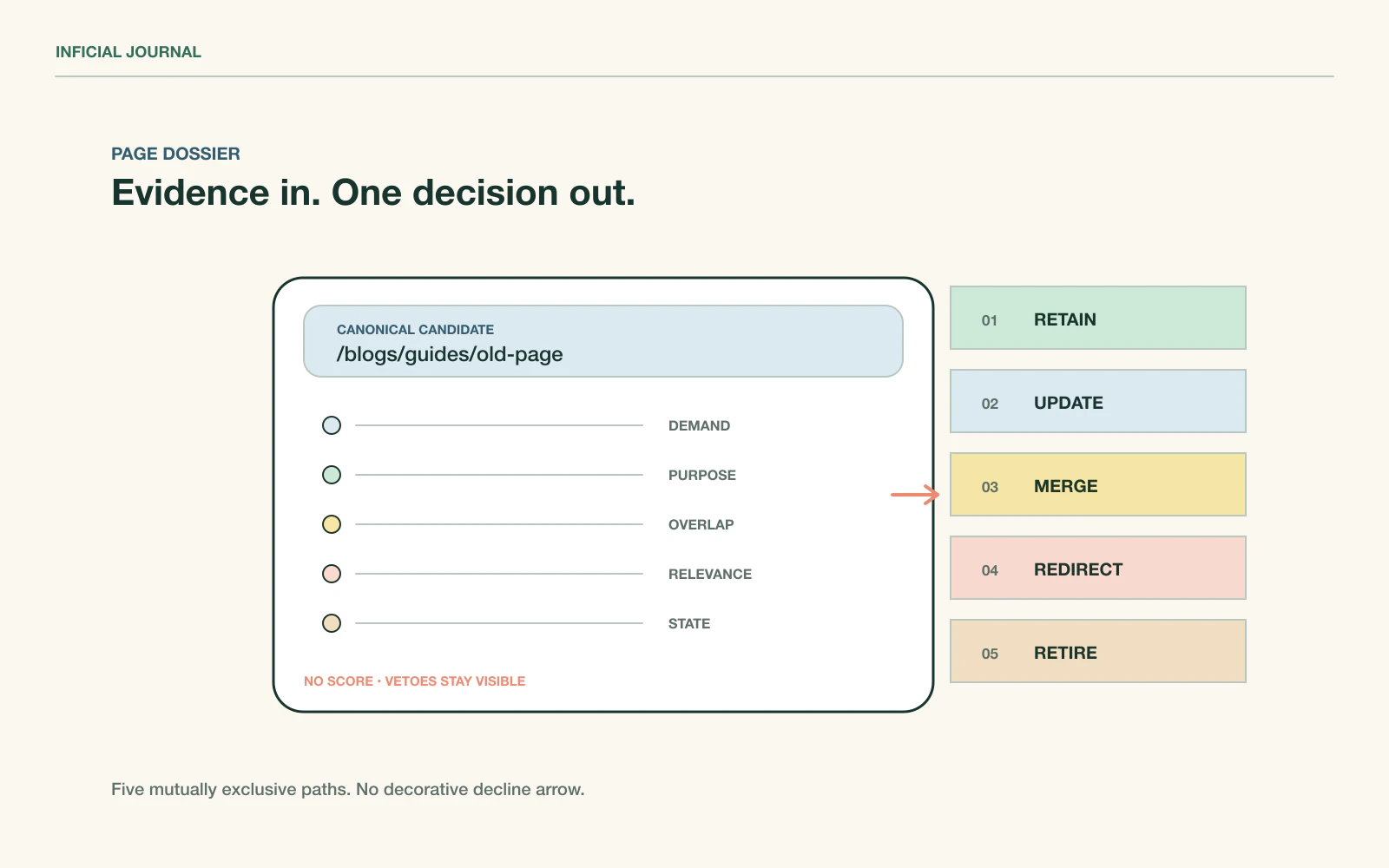
Do not automatically rescue every orphan. A page with no useful incoming route may be obsolete, duplicative or intentionally excluded. Decide whether it should be linked, consolidated, redirected, kept out of the index or retired. The audit is a content and architecture decision, not a command to connect everything.
Verify the route, then measure the destination
After release, recrawl the edited sources and confirm that the expected anchors and destinations appear in rendered HTML. Use URL Inspection for a representative page when rendering is uncertain. Check that shoppers can complete the same path without a dead end and that the destination remains reachable within a sensible site hierarchy.
Keep a small change record: source URL, anchor, destination, reason, owner and release date. Search Console can help you observe impressions and clicks over time, but a movement after the change is not proof that one internal link caused it. First verify the implementation; then interpret performance alongside content, demand, indexing and competing-result changes.
- Decide what to update, merge, redirect or retire
- Control Shopify faceted navigation URLs
- Validate migration redirects as a graph
Questions to settle during the audit
Is an XML sitemap enough for an important Shopify page?
How many internal links should a page have?
Should every product link back to a collection?
Can an app or JavaScript widget provide internal links?
Finish with a route you can demonstrate: a relevant source, an understandable anchor, a crawlable link and a live preferred destination. Once that route works, repeat the same method for the next important page.
Sources