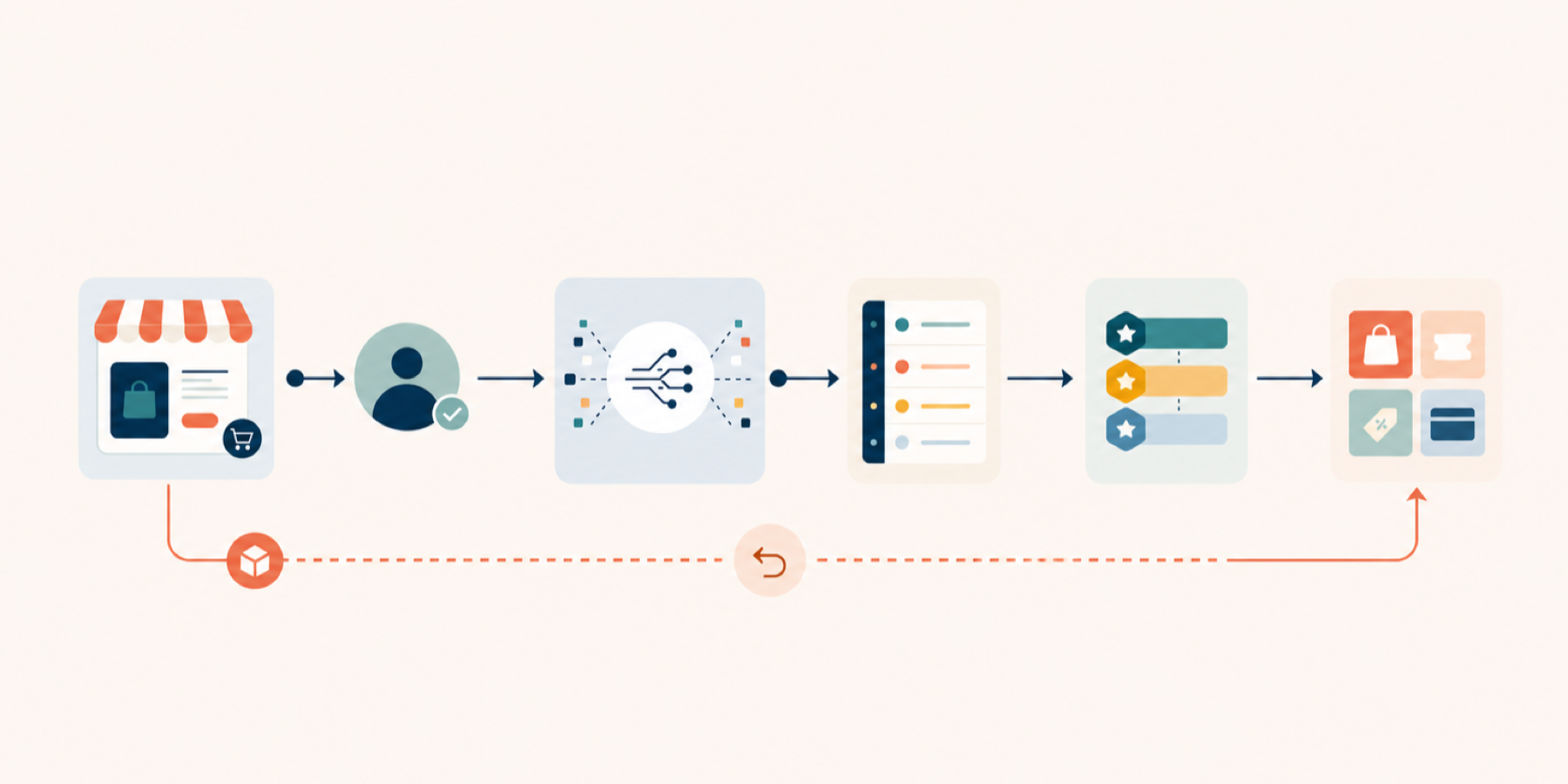

Points are easy to announce and hard to operate. A purchase creates points, a return should reverse them, a tier change can trigger a benefit, and a redeemed reward can become a Shopify discount, gift card, free product, shipping benefit, or store credit. Customer accounts, POS, email, support, subscriptions, markets, and refunds all need to agree about what happened.
That is the real Shopify loyalty-app decision. Do not choose the largest feature list. Decide whether the store needs a second value ledger, then prove that its identity, reversal, redemption, and exit rules can survive normal commerce operations.
Decide whether retention needs a second ledger
A points program cannot create product-market fit, replenishment demand, acceptable delivery, or a credible service experience. It can change the timing and form of an incentive for customers who already have a reason to return.
Start with one high-value hypothesis. Examples include improving second-order completion for a replenishable category, moving known customers into a higher purchase cadence, or giving retail and online customers one consistent benefit. Define the eligible cohort, behavior, cost ceiling, success signal, review date, and stop condition.
Do not use attributed loyalty revenue as the only success measure. A member can redeem a reward on an order they would have placed anyway. Compare eligible members with a reasonable control or holdout where possible, and read repeat rate, contribution margin, reward cost, return rate, and discount overlap together.
Use Shopify's native tools as the control
Shopify can build customer segments from order, spend, location, and other customer data. Discounts can target segments, specific customers, or markets. Shopify Flow can react when a customer joins a segment. Store credit can be issued to a customer account and used at checkout when the customer is signed in.
That native stack can support a controlled VIP segment, a win-back offer, early access, a service recovery credit, or a simple repeat-buyer benefit. It does not by itself provide a full customer-facing points ledger, configurable earning and redemption rules, referral attribution, tier history, or a broad loyalty-integration layer.
| Need | Native Shopify first | Loyalty app becomes reasonable when |
|---|---|---|
| One-off or cohort discount | Segment plus discount | The benefit must be earned, banked, and redeemed over time |
| Goodwill or retention value | Store credit | Earning rules, tiers, and automated balance communication are required |
| VIP messaging | Segment plus Flow | Tier state must update from several events and appear across channels |
| Referral incentive | Manual campaign or narrow tool | Referral identity, fraud controls, reward states, and disclosure workflow must be owned |
| Omnichannel recognition | Customer profile and POS process | Online and retail earning and redemption must share one balance |
Shopify store credit has boundaries. It requires customer accounts or Shop Pay for online redemption, cannot be applied to draft or edited orders, supports the initial subscription purchase but not recurring subscription bills, and has currency and partial-use constraints. A native-first test is valuable only if those limits fit the intended experience.
Choose the operating model before the vendor
| Operating model | Best fit | Main burden | Exit risk |
|---|---|---|---|
| Native retention offer | One cohort, one benefit, short test | Manual analysis and limited customer-facing state | Low if discounts and credit are documented |
| Lightweight points app | Purchase points and simple rewards | Rule governance, theme surfaces, support exceptions | Medium because balances and codes must move |
| Full loyalty platform | VIP, referrals, POS, lifecycle, subscriptions, several markets | More permissions, integrations, cost, QA, and ownership | High because balances, history, tiers, codes, and journeys diverge |
| Custom loyalty service | Distinct economics or cross-system requirements that packaged apps cannot meet | Product ownership, engineering, security, support, and reconciliation | High, but data contracts can be designed for portability |
Select the smallest model that can run the production requirement. A feature should enter the scope only if it changes a defined customer behavior and has an owner, failure path, monitoring signal, and rollback.
Map the loyalty ledger and its boundaries
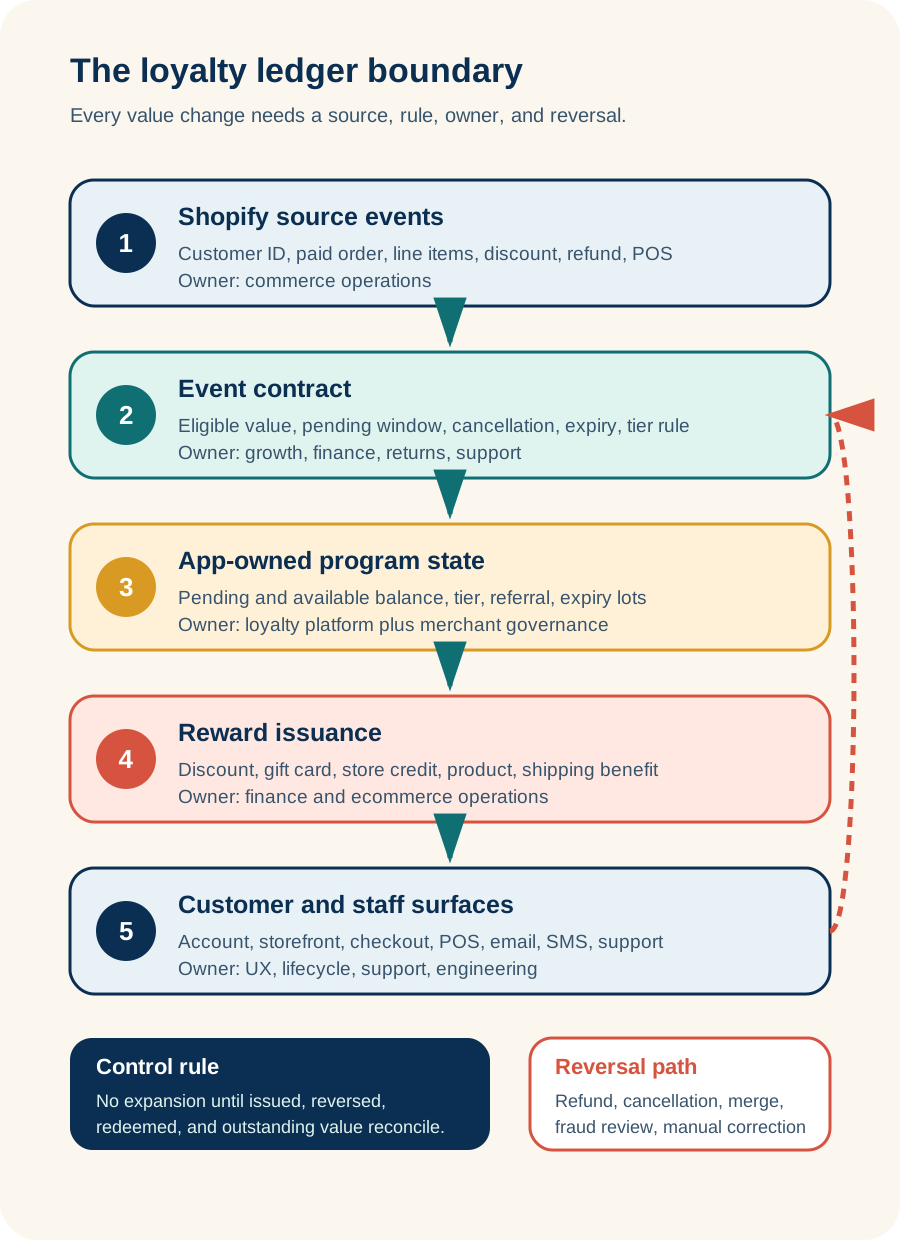
The critical boundary is not the loyalty widget. It is the event contract between Shopify and the app.
Shopify order and customer events feed the loyalty system. The app applies earning, approval, cancellation, expiry, tier, and redemption rules. It may then create or manage discounts, gift cards, store credit, free products, or other benefits. Email, SMS, POS, customer accounts, support, subscriptions, analytics, and custom storefronts consume the resulting state.
Returns expose weak designs. Smile documents that refund cancellation depends on the original earning rule still being enabled and uses the current rule value if that value changed, which can create a difference between points awarded and removed. LoyaltyLion documents webhook-based removal, proportional behavior for some partial returns, and recommends an approval period aligned to the return window so newly earned points cannot be spent first. These are product-specific rules, not category-wide guarantees.
Customer identity is another boundary. Shopify can merge customer profiles, but some profiles cannot be merged and the merge cannot be reversed. Smile states that Shopify customer merges do not merge Smile loyalty data automatically. Data on the profile Shopify does not retain can be deleted unless the merchant records and manually restores the balance; issued reward codes do not transfer.
Write the event contract
Use a field map that the ecommerce, finance, support, lifecycle, and technical owners can review.
| Event or state | Source | Loyalty action | Edge case to test | Owner |
|---|---|---|---|---|
| Paid order | Shopify order | Create pending points from eligible net value | Tax, shipping, gift card, discount, subscription, POS | Ecommerce operations |
| Approval date | Loyalty app | Move pending points to spendable | Return window, delayed fulfillment, fraud review | Finance and operations |
| Partial refund | Shopify refund | Reverse only the eligible returned value | Allocated discounts, shipping not refunded, changed earning rule | Returns lead |
| Full refund or cancellation | Shopify order | Reverse earned value and decide reward restoration | Reward spent before return, gift card refund, negative balance | Support lead |
| Customer merge | Shopify customer | Preserve one balance and reconcile the removed profile | Pending referral, unused code, missing email, subscription profile | Support and data owner |
| Tier change | Loyalty app | Grant or remove benefits | Refund-driven downgrade, calendar reset, grace period | Loyalty owner |
| Referral conversion | App plus Shopify order | Approve advocate and friend rewards | Self-referral, canceled order, disclosure, duplicate identity | Growth and legal |
Also define the unit economics. For an illustrative 5 percent reward, a $100 eligible order creates $5 of face value. That is not automatically a $5 realized cost because breakage and redemption basket economics matter, but it is still a commitment that needs a ceiling. Model issuance, approval, redemption, incremental margin, return behavior, and outstanding balances separately. Do not call unredeemed value profit.
For US referral or incentivized-review activity, ask counsel to review the message and disclosure workflow. FTC guidance says a material connection that could affect how an audience evaluates an endorsement should be disclosed clearly and conspicuously, and incentivized reviews need particular care.
Run a five-gate pilot
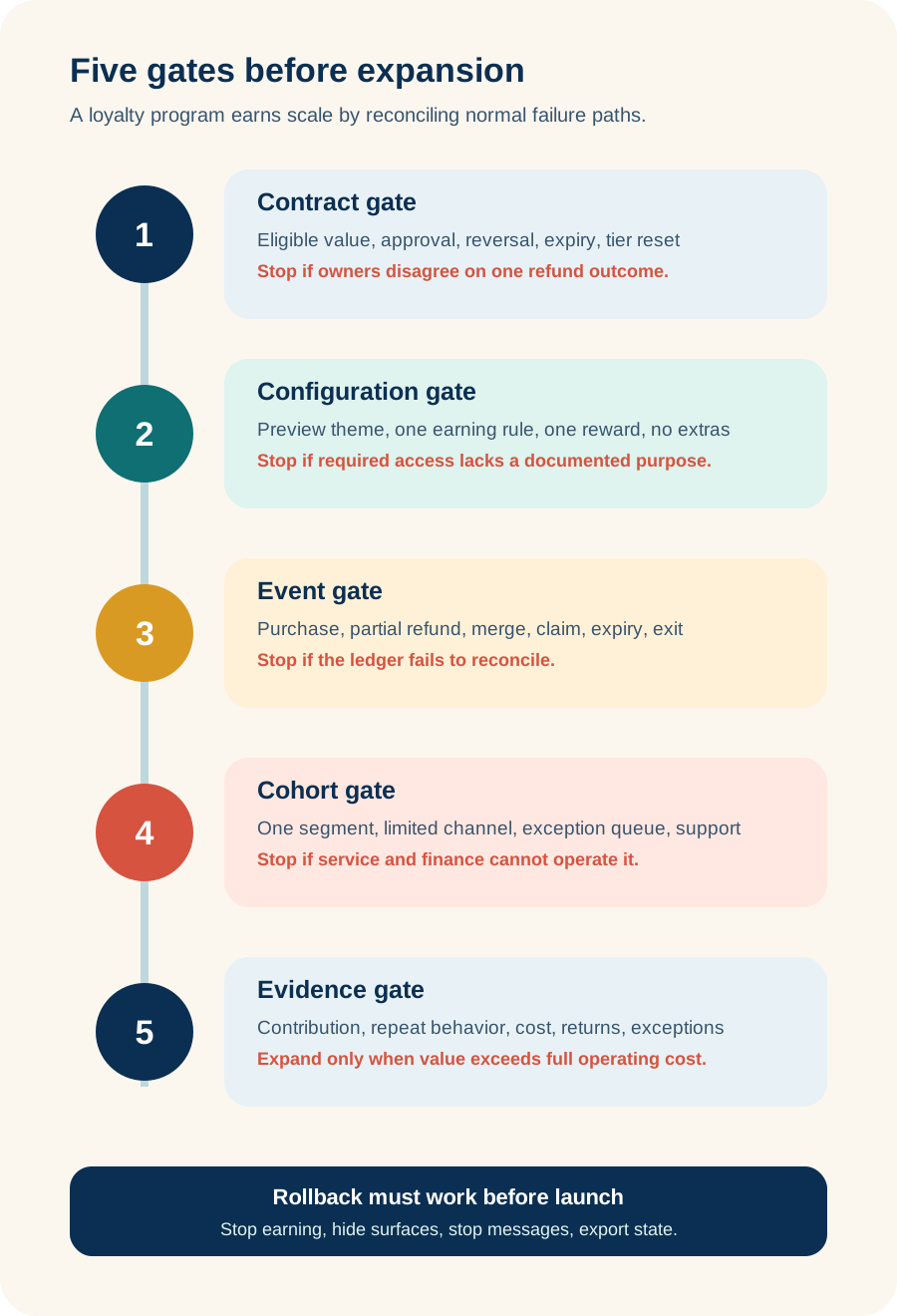
- Contract gate: define eligible value, earn date, approval delay, reversal behavior, expiry, tier reset, discount combinations, and negative-balance handling.
- Configuration gate: use a duplicate theme or preview surface. Keep referral, review, birthday, social, POS, and integration rules off until each has a verified owner and test case.
- Event gate: run test purchases, partial and full refunds, cancellation, discount allocation, gift card, subscription, customer merge, reward claim, unused reward, and expired reward scenarios.
- Cohort gate: release to one eligible segment or channel. Record the exact app plan, theme components, Flow workflows, lifecycle events, support macros, and dashboard definitions.
- Evidence gate: reconcile issued, pending, reversed, expired, redeemed, and outstanding value. Expand only if operational exceptions are within the agreed limit and incremental contribution justifies program and ownership cost.
Every gate needs a rollback. Before launch, prove that the team can disable earning without deleting balances, hide storefront surfaces without breaking accounts, stop messages, revoke an exposed rule, and export the current state.
Review permissions, privacy, and compatibility
Permission needs vary by app and feature. As one current example, Yotpo's Shopify App Store disclosure lists access to customer contact and device data, store-owner and contributor data, and edit access across customers, products, orders, discounts, gift cards, the Online Store, custom data, Markets settings, and price rules. That does not make the app unsuitable, but every requested scope needs a documented purpose, owner, retention expectation, and offboarding step.
Check these boundaries before approving access:
- Customer identity: customer ID, email, phone, address, account state, consent, merge behavior, guest treatment, deletion, and regional requests.
- Commerce: order status, line items, net eligible value, discounts, refunds, returns, gift cards, store credit, subscriptions, markets, currencies, and POS.
- Storefront: app blocks, app embeds, injected theme code, customer-account extensions, checkout surfaces, mobile overlap, accessibility, and performance.
- Downstream systems: email and SMS events, support visibility, Flow actions, analytics definitions, data warehouse feeds, referral tooling, and custom APIs.
Shopify notes that apps can use theme blocks, embeds, or injected code, and a new published theme might require reactivation. Shopify also warns that some injected theme code is not removed automatically during uninstall, workflows stop, and app-held data might not be recoverable. Test storefront scripts and account surfaces on mobile, keyboard, slow network, consent states, and every active market.
Compare cost at the production requirement
Pricing was verified on August 20, 2026 from official Shopify App Store listings. These examples show different pricing shapes, not a ranking or recommendation.
| App | Current listed entry and paid examples | Production question |
|---|---|---|
| Smile | Free up to 200 monthly orders; Essential $15 up to 500; Standard $79 up to 1,000; Growth $199 including 2,500, then $20 per additional 100 | Which plan includes the required integrations, VIP, expiry, checkout, subscription, reporting, and order volume? |
| LoyaltyLion | Free to install up to 400 monthly orders; Classic $199 monthly; over 500 monthly orders routes to custom Advanced or Plus pricing | Does the quoted tier cover every POS location, market, integration, onboarding, and support requirement? |
| Yotpo Loyalty | Free to install for fewer than 100 monthly orders; Pro $199 monthly, with $0.08 to $0.20 per order from 500; more than 5,000 orders and advanced features use other pricing | What is the all-in cost at real volume, and which advanced capabilities require a quote? |
The listings also show material feature differences by tier. Price the expected production month, seasonal peak, integration count, implementation, creative work, lifecycle messages, support training, finance reconciliation, and exit project. Reverify before purchase because plan names, thresholds, usage charges, and included capabilities can change.
Assign owners and monitor exceptions
- Growth owns the hypothesis, cohort, offer, experiment, and incremental value analysis.
- Ecommerce operations owns earning rules, exclusions, promotion calendar, and change log.
- Finance owns reward-cost policy, outstanding-value reporting, reconciliation, and approval limits.
- Support owns balance adjustments, return exceptions, duplicate profiles, fraud escalation, and customer communication.
- Lifecycle marketing owns consent-aware messages and suppression when points or tier state changes.
- Engineering owns integration health, theme performance, webhooks, monitoring, and rollback.
- Privacy or legal owns notices, contracts, retention, deletion, referral disclosure, and regional requirements.
Review a weekly exception queue: negative balances, large manual adjustments, failed or delayed events, unmatched customers, duplicate rewards, refund mismatches, unredeemed codes, tier disputes, referral fraud, and messages sent from stale state. Review economics monthly and after any earning-rule, return-policy, discount, market, subscription, or identity change.
Know when not to use a loyalty app
Hold the app decision when repeat demand is structurally weak, the margin cannot support the proposed reward, customer identity is fragmented, returns are not reconciled, the team cannot operate another customer-data processor, or the program would mainly add a permanent discount to purchases that were already likely.
Also hold when a native segment and benefit can answer the same hypothesis, the required customer-account or POS surface is unsupported, the app cannot reproduce subscription or multi-market behavior, referral controls are inadequate, accessibility or performance fails, production features require an unapproved cost tier, or the vendor cannot provide a usable export and deletion process.
Plan the exit before launch
Exportability is not the same as reversibility. Smile documents a migration path for balances, birthdays, and current VIP tiers, but says points history, VIP history, and unused discount codes do not transfer automatically to a new account. Ask every vendor for a sample export before contracting.
The minimum exit pack should include customer identifier, available and pending balance, lifetime earned and redeemed totals, tier and qualification date, expiry lots, issued reward status, referral state, manual adjustments with reason, source order IDs, and timestamps. Record which fields are unavailable.
Before removal, freeze new earning, reconcile the final event cutoff, export and hash the files, preserve customer communications, disable lifecycle triggers, remove storefront surfaces in a duplicate theme, inspect residual code, settle unused rewards under the program terms, and keep a documented customer-support path. Switching cost is part of the original app decision.
Take one safe action this week
Choose one real order from the last 30 days that had a discount and a partial refund. On paper, calculate eligible value, points issued, approval date, points reversed, tier impact, reward restoration, and the customer message. Add one duplicate-profile scenario and one app-exit row.
If the team cannot agree on those outcomes, it is not ready to configure a loyalty app. The disagreement is useful: it identifies the operating rules that must be resolved before a vendor can automate them.
Inficial can help map the loyalty data contract, compare Shopify-native and app-based options, test theme and account surfaces, and build a reversible implementation plan.
No commercial relationship, sponsorship, affiliate arrangement, or endorsement involving Shopify, Smile, LoyaltyLion, Yotpo, or another loyalty vendor is known or implied.
Sources
- Shopify Help Center: Store credit, accessed August 20, 2026
- Shopify Help Center: Managing and editing discounts, accessed August 20, 2026
- Shopify Help Center: Creating customer segments, accessed August 20, 2026
- Shopify Help Center: Customer joined segment in Shopify Flow, accessed August 20, 2026
- Shopify Help Center: Managing customers, accessed August 20, 2026
- Shopify Help Center: Extend your theme with apps, accessed August 20, 2026
- Shopify Help Center: Uninstalling apps, accessed August 20, 2026
- Shopify App Store: Smile loyalty program, accessed August 20, 2026
- Shopify App Store: LoyaltyLion loyalty program, accessed August 20, 2026
- Shopify App Store: Yotpo loyalty rewards program, accessed August 20, 2026
- Smile Help Center: Configure points cancellation for refunds, accessed August 20, 2026
- LoyaltyLion Help Center: Refunds and returns on purchased products, accessed August 20, 2026
- Smile Help Center: Manage customers, accessed August 20, 2026
- Smile Help Center: Move a loyalty program to a new ecommerce platform, accessed August 20, 2026
- US Federal Trade Commission: Endorsement Guides questions and answers, accessed August 20, 2026