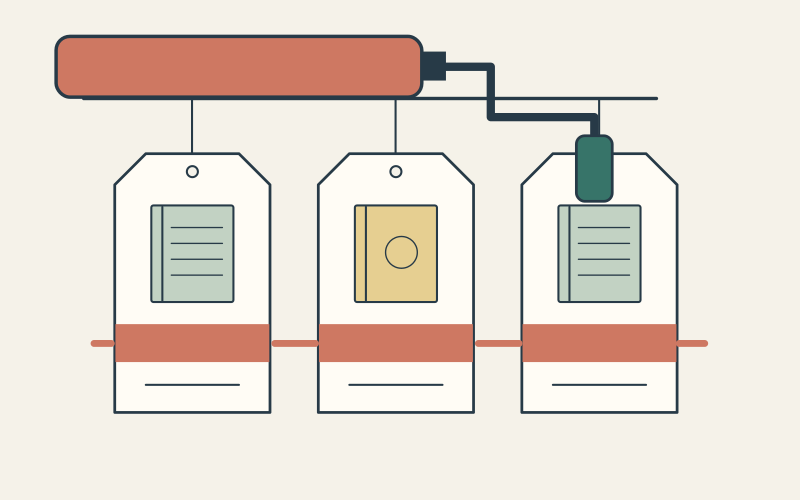

The browser does not care which department bought a script. On a product page, review widgets, experimentation code, analytics, consent tools, chat, personalization, and abandoned app snippets all compete for the same main thread.
Give that shared resource an admission contract. A tag, embed, app block, or remote library earns access only with a named purpose, loading boundary, owner, evidence of value, and expiry decision.
Start with the browser, not the app list
An app list is not a script inventory. Code can arrive through theme assets, app embeds, app blocks, tag managers, custom pixels, app pixels, checkout extensions, consent tools, remote libraries, and hard-coded snippets left after an uninstall.
Record URL, initiator, execution context, page types, consent condition, owner, business purpose, vendor, renewal date, and removal method. Group duplicates by destination and purpose. Two teams can send the same event through separate tags while believing each owns the only copy.
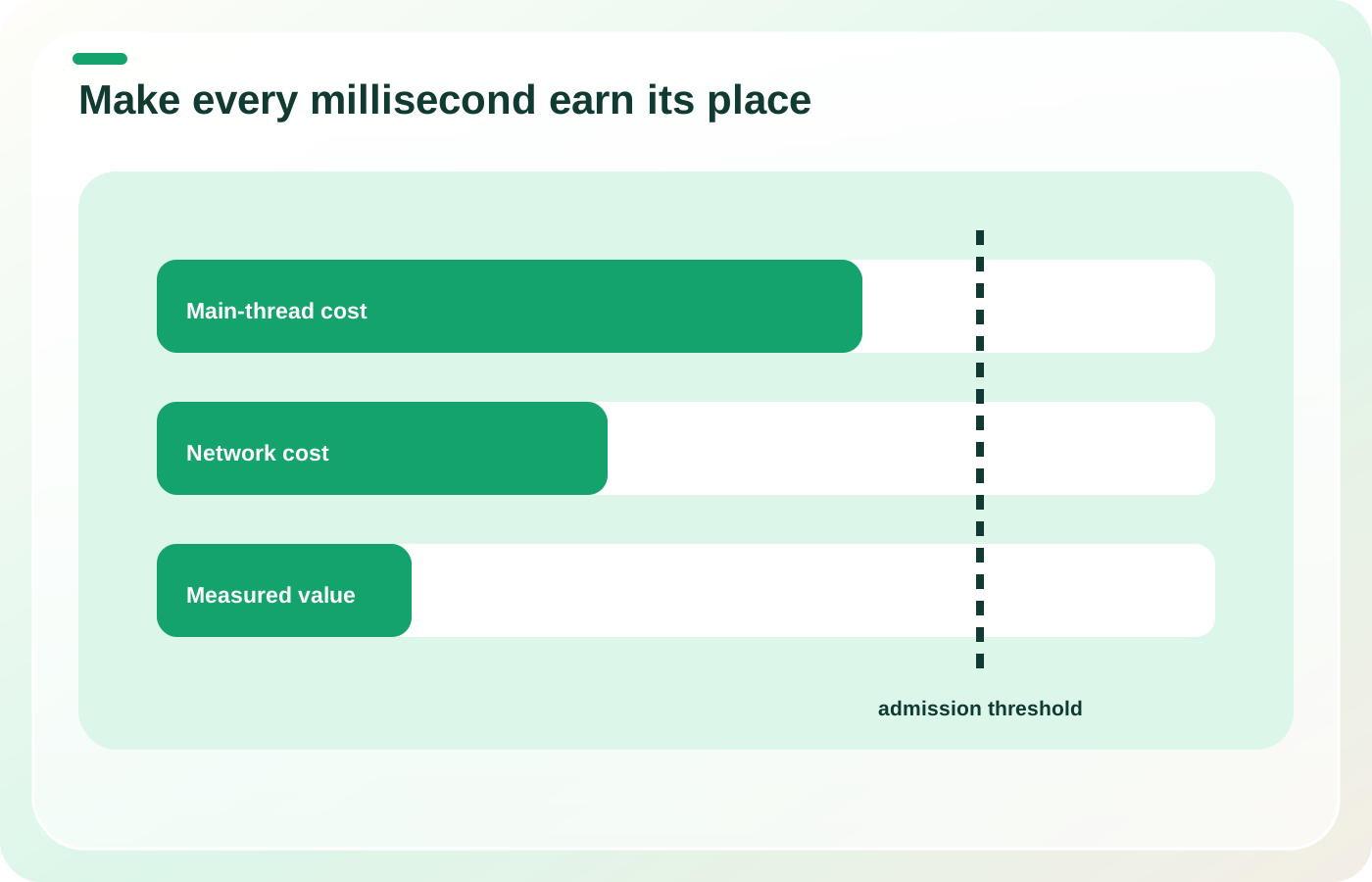
Price scripts against a customer task
Shopify's performance guidance notes that JavaScript from themes and apps runs on the main thread and competes with rendering and input. Do not translate that into "all apps are slow." Measure the page and interaction where the script runs.
Use both:
- Field evidence: Shopify Web Performance reports by metric, device, page URL, and page type.
- Controlled diagnostics: browser traces and synthetic comparisons with the component enabled and disabled in an unpublished theme or controlled environment.
Field reports use real-user Core Web Vitals and can be delayed. Synthetic tests are faster but do not reproduce the customer population. A decision should explain how both forms of evidence agree or differ.
Make the budget an admission contract
Set budgets by template and customer task, not one universal page-weight number.
| Budget dimension | Control question | Example action |
|---|---|---|
| Main-thread work | Does interaction remain responsive? | Delay nonessential execution |
| Network cost | Is the library fetched on pages that use it? | Restrict scope or lazy-load |
| Layout stability | Does late UI reserve space? | Allocate dimensions before render |
| Event duplication | Is one action sent more than once? | Consolidate delivery paths |
| Privacy and consent | Does collection match the allowed state? | Block until required consent |
| Business value | Which decision or workflow uses the data? | Remove tags with no active consumer |
Define a threshold, review window, and owner for each. A budget without an enforcement action is a report, not a control.
Choose the narrowest execution surface
Shopify manages app and custom pixels through Customer events. Web Pixels run in controlled sandbox models and subscribe to Shopify customer events. When a supported app pixel meets the requirement, it can reduce the need for theme-level tracking code and supports centralized management.
That does not make every pixel complete. Confirm event coverage, field availability, consent behavior, checkout surfaces, account pages, and downstream receipt. Shopify documents limitations for some DOM events and account surfaces. Use the least invasive path that still satisfies the verified requirement.
Give every script an expiry date
Review the inventory when an app is installed, a campaign tag is added, a theme is updated, or a vendor changes its SDK. Add expiry dates to campaign-specific scripts. Require renewal evidence for tags that continue beyond their original use.
Monitor LCP, INP, and CLS by page type and device. Pair them with customer-task signals such as variant selection, add-to-cart success, checkout progression, and error rates. If performance changes, examine release annotations before attributing cause.
Do not confuse correlation with cause
Do not remove a revenue-critical capability based on one lab run, or keep a redundant tag because its individual transfer size looks small. Repeated execution, long tasks, interaction timing, and duplication can matter more than file size. Low-traffic stores can also show volatile field data, so report uncertainty.
Hold a script cancellation review
Inventory every script on the home, collection, product, cart, and checkout-entry paths. Assign an owner and business consumer. Mark any script with no owner, no current consumer, duplicate event delivery, global loading without global need, or no safe removal method. That list is the first performance backlog.
Sources
- Shopify developer documentation, Theme performance best practices, accessed August 24, 2026
- Shopify Help Center, Web performance reports, accessed August 24, 2026
- Shopify developer documentation, Web Pixels API, accessed August 24, 2026
- Shopify Help Center, Pixels and customer events, accessed August 24, 2026