
Changing Shopify's Meta data-sharing level can improve event connectivity. It cannot prove that every browser and server event respects the visitor's consent state.
That distinction matters in Europe. Shopify's Standard setting uses the Meta Pixel, while Enhanced and Maximum also use Conversions API for server-to-server Purchase delivery. Meta explicitly says Conversions API is not designed to bypass European privacy rules.
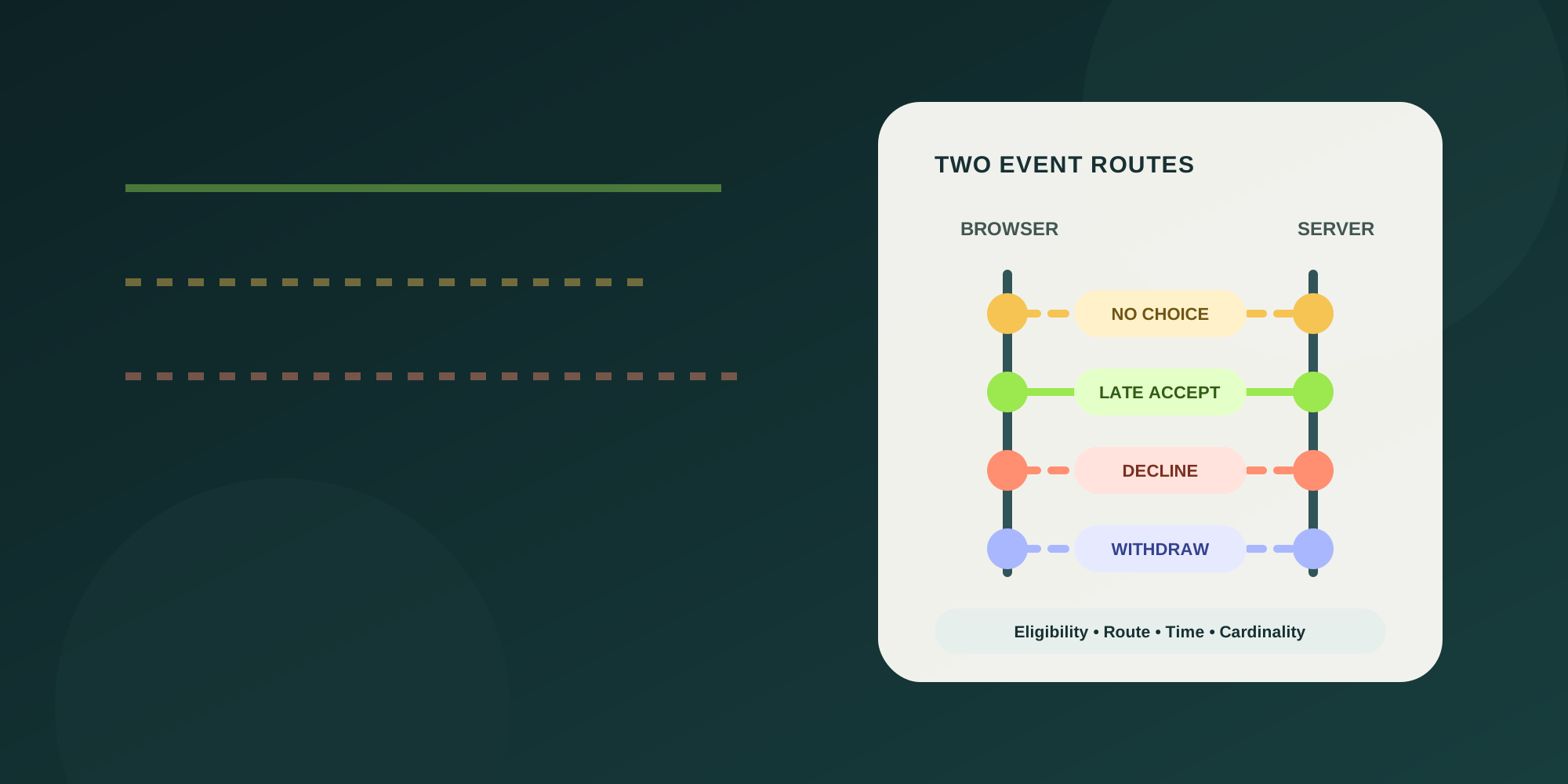
The useful question is not, “Is CAPI enabled?” It is, “What does each event path do before consent, after a late acceptance, after refusal, and after withdrawal?”
The hidden failure is a state transition
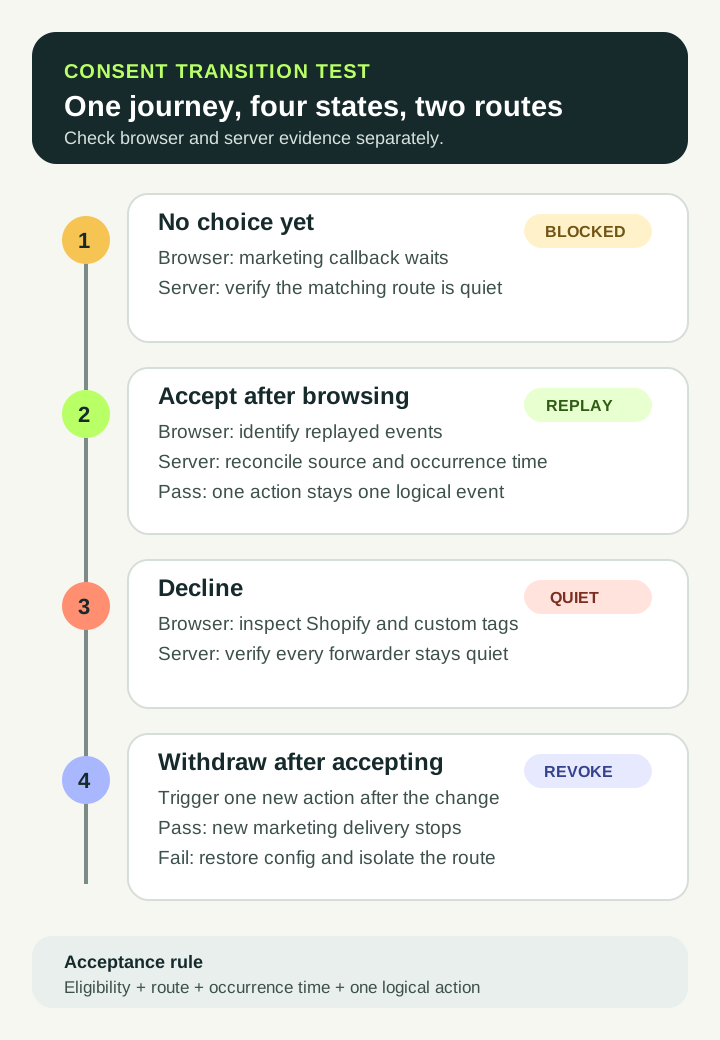
Shopify app pixels declare the privacy purposes they require. In opt-in regions, their callbacks execute only after consent. Shopify also documents that previously registered events are then replayed. This is useful for continuity, but it creates a QA edge case: a product view recorded before acceptance may arrive after acceptance.
That does not mean the event is wrong. It means its delivery time, occurrence time, and consent state must remain distinguishable in your test record. A check performed in a browser that already remembers consent will never expose this path.
The system boundary is wider than the Shopify pixel sandbox. Shopify warns that its banner governs Shopify-specific tools. Manually installed third-party pixels may require separate consent logic. Enhanced and Maximum data sharing add a server route that browser developer tools cannot fully observe.
This is why a green Pixel Helper check is insufficient. It proves that one browser request fired. It does not prove that the server route was quiet before consent, that a replay did not create an apparent duplicate, or that an old theme snippet is not sending a second event.
Build the event contract before opening Events Manager
Assign three owners. Growth defines the events required for optimisation. Engineering maps every transport route. The privacy owner or qualified adviser confirms purposes, notice, and regional rules. Automated Shopify settings help, but Shopify states they are not legal advice.
Then complete this field map for PageView, ViewContent, AddToCart, InitiateCheckout, and Purchase.
| Test state | Browser path | Server path | Pass condition |
|---|---|---|---|
| No choice yet | Shopify app pixel and custom tags | Meta partner or custom CAPI route | No marketing delivery before the required permission |
| Accept after browsing | Initial events plus any replay | Events created after the transition | Times are explainable; one action remains one logical event |
| Decline | Shopify-managed and manual tags | Every server forwarder | Marketing paths stay quiet |
| Withdraw after accepting | New events after the change | New server events after the change | New marketing delivery stops under the approved contract |
For each row, record event name, occurrence time, delivery time, browser or server source, consent state, integration owner, and the evidence location. Do not put real customer identifiers into the QA sheet.
Run the four-state test without changing campaign logic
Use an isolated browser profile, synthetic activity, and the regional storefront experience. Freeze the current banner, Meta data-sharing level, app versions, theme version, and custom scripts before testing.
- Inventory routes. Include Facebook and Instagram by Meta, app pixels, custom pixels, tag-manager containers, theme snippets, checkout extensions, and any backend job that forwards orders.
- Run one clean journey per state. Clear consent between journeys. Include a late accept after a product view and a withdrawal before a second action.
- Reconcile both surfaces. Browser tools show browser delivery. Meta event diagnostics show the combined dataset. Shopify order data confirms whether a synthetic Purchase represents one order.
- Investigate by owner. An unexpected browser event points to pixel or consent configuration. An unexpected server event points to the partner integration or custom forwarder. Two Purchase routes require a source and identity review before optimisation continues.
Do not use Meta-attributed conversions as the pass condition. Attribution applies its own crediting rules. This test is about event eligibility, route, and cardinality: whether one business action becomes zero, one, or multiple logical events.
Monitor, rollback, and know when to stop
After any approved change, monitor Meta diagnostics, browser-versus-server source mix, Shopify order count, and consent-choice trends for an agreed observation window. Expect platform totals to differ. Escalate sudden structural changes, not ordinary attribution disagreement.
If a state fails, restore the recorded integration configuration. Disable only the duplicate or unmanaged route, then rerun all four states. Do not remove the consent banner to recover event volume.
Do not increase data sharing when the banner is not integrated with Shopify's Customer Privacy API, the team cannot enumerate custom tags, or nobody owns post-change monitoring. Better connectivity is valuable, but it is not a substitute for an auditable consent boundary.
Run one founder action this week
Ask growth, engineering, and privacy to complete the four-row contract for Purchase only. If the team cannot name every browser and server owner, do not change the Meta sharing level. That gap is the finding.
Inficial can help map Shopify pixels, server events, consent states, and measurement ownership before a data-sharing change.
Sources
- Facebook data sharing, Shopify Help Center, accessed August 21, 2026
- About web pixels, Shopify developer documentation, accessed August 21, 2026
- Customer Privacy Standard API, Shopify developer documentation, accessed August 21, 2026
- Configuring customer privacy settings, Shopify Help Center, accessed August 21, 2026
- About Conversions API, Meta Business Help Center, accessed August 21, 2026
- Meta Business Tools Terms, accessed August 21, 2026
- Guidelines 2/2023 on Article 5(3) of the ePrivacy Directive, European Data Protection Board, final version adopted October 16, 2024; accessed August 21, 2026